




























































Austral September
The oldest surviving manuscript of the "Gloria al Bravo Pueblo" has a peculiarity that has not been sufficiently highlighted. Each of the parts that make up this version whose author, according to the graphological study, is Atanasio Bello Montero, has on the obverse a work entitled "Patriotic Song No. 2». The presumption […] The entry Austral September was published first in Latest News.

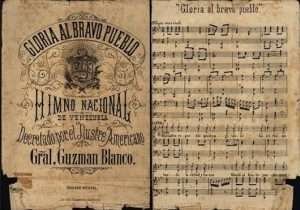
The oldest surviving manuscript of the "Gloria al Bravo Pueblo" has a peculiarity that has not been sufficiently highlighted. Each of the parts that make up this version whose author, according to the graphological study, is Atanasio Bello Montero, has on the obverse a work entitled "Patriotic Song No. 2". The presumption reached by the researchers is that both works should have been interpreted on some special occasion in a public act following the order of agreement
The curious thing is that this work that accompanies our future national anthem is the national anthem of Chile, whose author, the Spanish musician Ramón Carnicer, had been commissioned, in 1827, to compose a new version that replaced the one conceived in 1819 by Manuel Robles. The original lyrics were by Bernardo Vera y Pintado and were rewritten by Eusebio Lillo in 1847 maintaining the same chorus that says "Dulce Patria receives the vows with which Chile swore in your name, that either the tomb will be of the free or the
Chile and Venezuela have elements of conjunction in their history, being the one that has most highlighted the presence and contributions of Andrés Bello. Bolívar also left a testimony of admiration for Chile when he wrote in his Letter from Jamaica that "The kingdom of Chile is called by the nature of its situation, by the innocent and virtuous customs of its inhabitants, by the example of its neighbors the fierce Republicans of Arauco, to enjoy the blessings that the just and sweet Laws of a
The entry Austral September was published first in Latest News.